Heat pumps
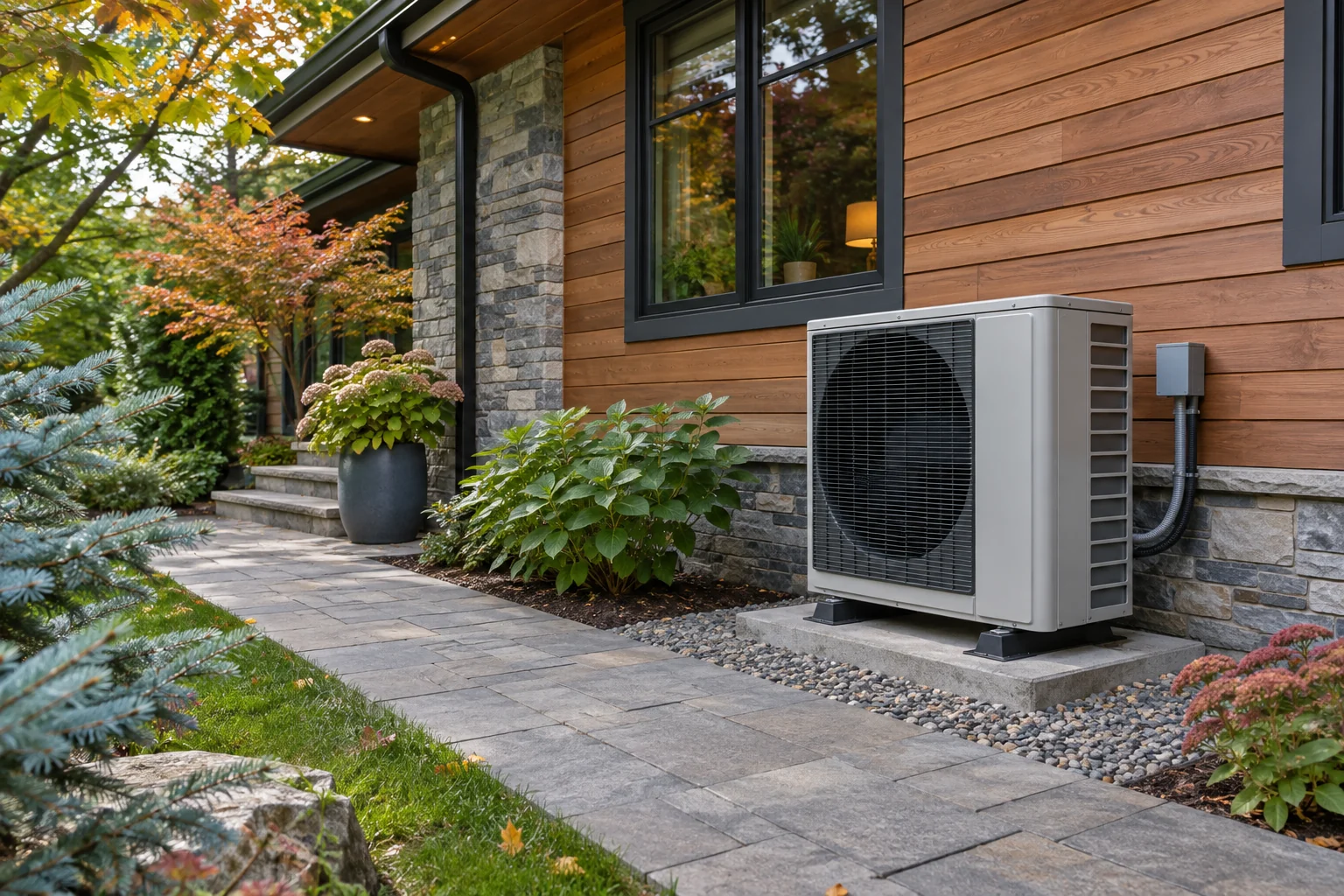
One outdoor unit, two seasons of work
Heat pumps move heat rather than only creating it — the same equipment can cool in summer and heat in winter, with behavior that depends on climate, insulation, and how ducts or wall units are laid out.
Ducted versus ductless
Ducted heat pump
Uses existing or new ductwork like a conventional central system. Duct condition, sizing, and sealing strongly affect delivered comfort. Retrofits often start with a load-oriented conversation and a duct inspection mindset.
Ductless mini-split
Indoor heads mount on walls or ceilings; refrigerant lines run to an outdoor unit. Useful for additions, finished basements, or homes without practical ducts — zoning is often head-by-head.
Home and climate considerations
- Envelope — Insulation and air leakage change how much capacity the home asks for in cold snaps.
- Backup heat — Auxiliary electric or furnace backup may run at low outdoor temps; understand staging on your thermostat.
- Defrost — Outdoor frost cycles are normal in heating mode; loud or frequent defrost may be worth noting for a technician.
- Noise — Outdoor placement, mounting pads, and line-of-sight to bedrooms matter for daily use.
Questions for an installer
- How was heating and cooling load estimated for this home — room by room or whole-house?
- If ducted, what duct repairs or resizing are part of the plan?
- How will backup or auxiliary heat be configured in your climate band?
- Where will outdoor and indoor units sit for service access and clearances?
- What documentation and control orientation should you receive at hand-off?