Service
A steady visit listens before the toolbox opens
Service work runs clearer when you share symptoms in your own words, when the technician can reproduce or rule out patterns, and when next steps are spelled out before repairs begin.
A general working method
- Request context — What changed, when it started, and whether it affects heating, cooling, or both.
- Listening — Follow-up questions about thermostat use, recent filter changes, and room-by-room feel.
- Inspection — Safe visual and instrumented checks on controls, airflow, and equipment appropriate to the complaint.
- Findings — Plain language summary of what was measured or observed — not jargon without explanation.
- Options — Repair paths, monitor-and-return choices, or broader system discussions before work orders proceed.
- Close-out — What was done, how to operate the system afterward, and what to watch for until the next visit.
What helps on the day of the visit
- Access — Clear path to equipment areas and thermostat.
- Notes — Photos of thermostat screens or error codes if they appear intermittently.
- Pets — Secure animals so doors to utility spaces can stay open during inspection.
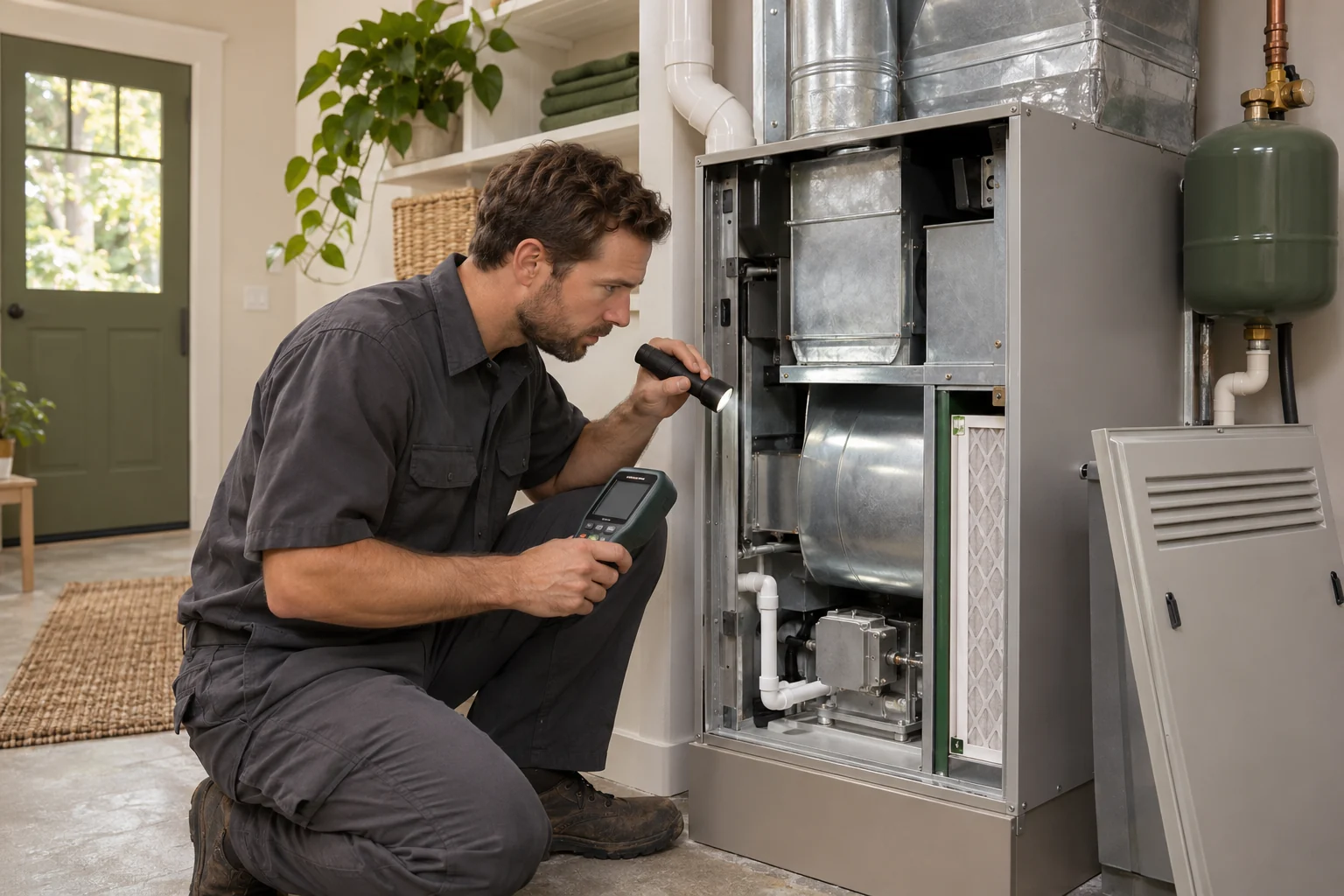
After the visit
Keep any paperwork with model numbers and settings discussed. If something feels unchanged, note cycle times and room temps before follow-up — patterns help the next conversation stay focused.