Skip to content

Furnace · boiler · heat pump heat

Sundial Heating & Cooling

Heating

Heating problems deserve context, not guesswork

A heating visit makes more sense when you can describe what changed — which rooms feel cold, what sounds are new, and whether cycles feel longer or shorter than usual.

System types you might have

Forced-air furnace

Burner or heat exchanger warms air that a blower pushes through supply ducts. Thermostat cycles and filter condition strongly affect what you feel.

Boiler or hydronic

Hot water or steam moves heat through radiators, baseboard, or in-floor loops. Air in lines or pump issues can show up as uneven warmth.

Heat pump (heating mode)

Refrigerant carries heat indoors; auxiliary or backup heat may run in very cold conditions depending on equipment and settings.

Hybrid or dual-fuel

Heat pump plus furnace backup — balance points and thermostat staging determine when each source runs.
Symptoms worth describing

  • Temperature drift — One zone cold while others feel normal; note time of day and outdoor temps.
  • Short or long cycles — Equipment turning on and off quickly versus running continuously.
  • Odors or sounds — New burning dust smell at season start versus persistent metallic or rumbling noise.
  • Humidity feel — Very dry winter air may relate to airflow or equipment type; describe comfort, not medical claims.
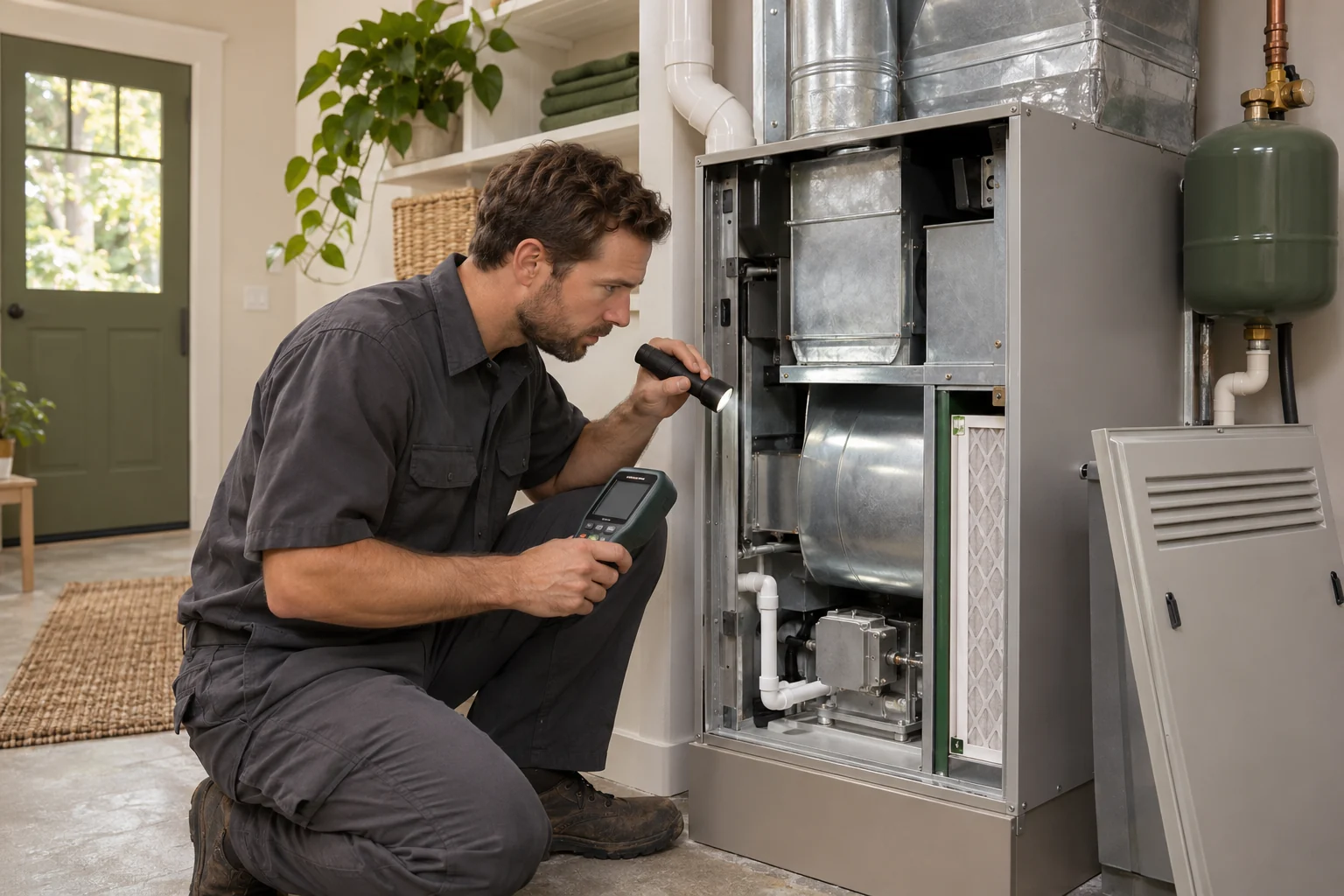
Technician inspecting a residential furnace or air handler inside a home utility closet.

What a diagnostic conversation may cover

  1. History — Age of equipment, recent repairs, filter habits, and thermostat program.
  2. Measurements — Supply and return temperatures, static pressure, or combustion checks where applicable and safe.
  3. Controls — Whether staging, defrost, or backup heat settings match how the home is used.
  4. Options — Repair versus component replacement versus broader system planning — explained before work proceeds.